Protecting Villa Park's Tree City USA Canopy for 40+ Years — One Storm-Ready Property at a Time
ISA-Certified Arborists helping Villa Park homeowners protect mature Prairie Path–corridor shade trees, prevent storm damage along tight, tree-lined residential blocks, and safely remove hazardous oaks, maples, and ash trees near older bungalows, garages, and power lines.
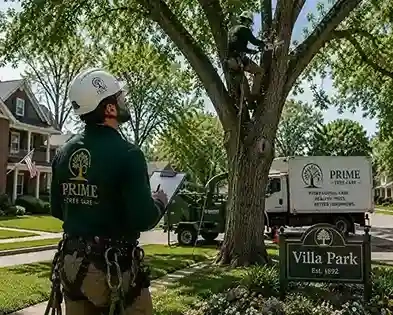
The most-requested tree services in Villa Park, IL are mature shade-tree pruning, hazardous tree removal, storm damage cleanup, tree health inspections for Emerald Ash Borer and Dutch Elm Disease, stump grinding, and utility-aware clearance pruning near overhead lines — driven by the village's decades-old, densely planted residential canopy along and near the Illinois Prairie Path.
Prime Tree Care is based at 8811 W 87th St, Hickory Hills, IL. Villa Park is about 25 miles northwest — roughly a 35–40 minute drive via I‑294 N and IL‑38 (Roosevelt Rd) or I‑88 to IL‑83. We regularly dispatch crews to the North Ave (IL‑64) / Villa Ave / Ardmore Ave corridor for both scheduled and emergency work.
Population ~22,300 · DuPage County · Incorporated 1914 · Nicknamed "The Garden Village" · Zip codes 60181 & 60158 · Bordered by North Ave (IL‑64), Roosevelt Rd (IL‑38) & Kingery Hwy (IL‑83) · Home of the Illinois Prairie Path
Villa Park has been recognized as a Tree City USA community for more than 40 consecutive years, and it shows — the village's residential streets carry one of the more mature, densely planted canopies in eastern DuPage County. That legacy is exactly why so many of its trees now need expert attention.
Villa Park grew up as a company town in the early 1900s around the Ovaltine factory, and the residential blocks built out through the mid-20th century were planted heavily with fast, cheap shade — silver maple, green ash, and American elm among them. Decades later, that means a huge share of Villa Park's private and parkway trees are approaching or past peak structural maturity at roughly the same time. Co-dominant stems, included bark, and overextended limbs that were manageable at 30 years old become genuine hazards at 70 or 80.
The village's own Forestry Division maintains parkway trees along streets like Ardmore Avenue, Villa Avenue, and Michael Lane, but the trees inside your property line — including anything overhanging a garage, driveway, or the alley behind older bungalows near the Prairie Path — are your responsibility to inspect, maintain, and remove if they become hazardous. We work both sides of that line every week.
Every estimate accounts for what's actually on the ground in Villa Park — the historic districts, trail corridors, and traffic patterns that shape how (and when) tree work can safely happen.
Villa Park's silver maples, oaks, and honey locusts planted during the village's early build-out now show co-dominant stems, weak branch unions, and uneven weight distribution — classic structural pruning candidates before a limb fails on its own schedule.
Villa Park's older bungalow blocks near Ovaltine Court and the Prairie Path have tight lot lines, narrow gangways, and limited drop zones. We plan precision rigging and fence-protection measures before the first cut, not after.
Straight-line winds, summer thunderstorms, and heavy wet snow regularly stress Villa Park's mature canopy loading. Preventive pruning, cabling, and bracing reduce limb-failure risk before the next front moves through DuPage County.
Every service below is performed by ISA-certified arborists on Villa Park properties, from Ovaltine Court to the newer blocks near Roosevelt Road.
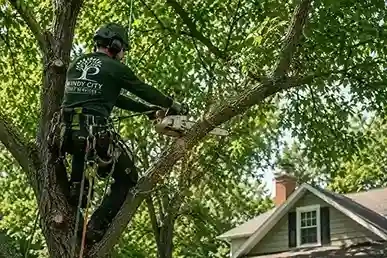
Structural pruning, canopy reduction, and deadwood removal timed to dormant season — with oak wilt awareness built into spring and summer scheduling.
Learn More →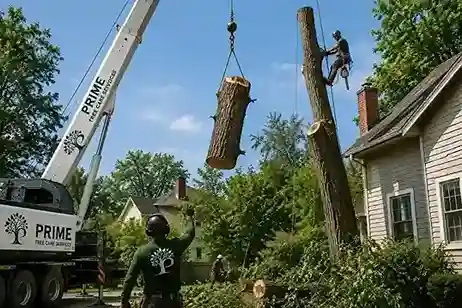
Hazardous, dead, or storm-damaged tree takedowns, including tight-access backyards near Ovaltine Court and crane-assisted removals for larger canopy trees.
Learn More →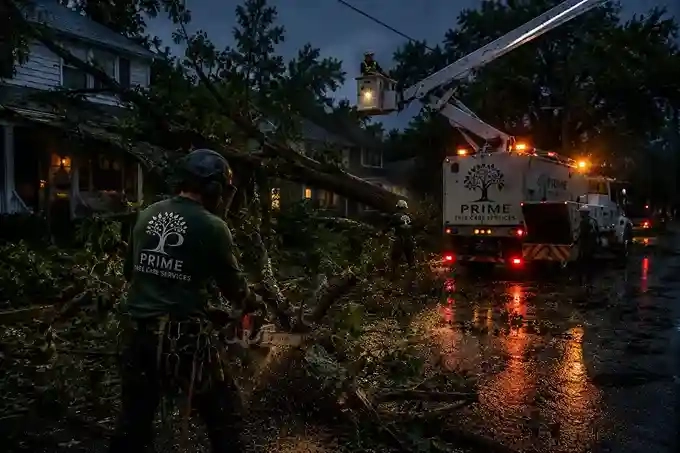
24/7 response for downed limbs, leaning trees, and storm damage across Villa Park, with safe protocols around energized power lines on North Ave and Roosevelt Rd.
Learn More →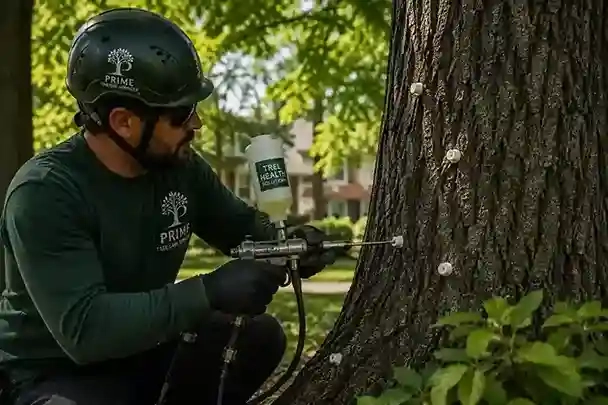
On-site diagnosis for Emerald Ash Borer, Dutch Elm Disease, canopy decline, and root stress common to Villa Park's aging, densely planted blocks.
Learn More →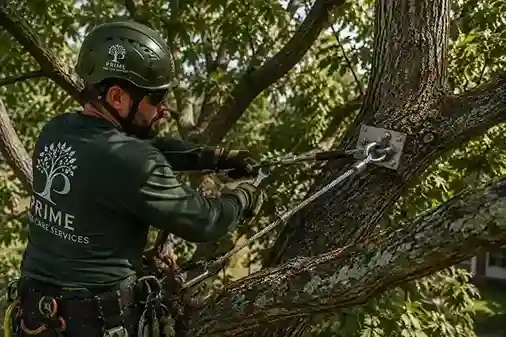
Nutrient and root-zone treatment addressing soil compaction along Villa Park's older residential lots and parkways.
Learn More →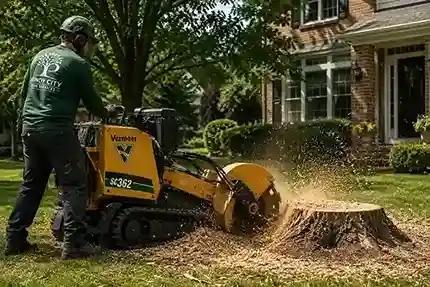
Below-grade stump removal that clears trip hazards and preps the site for replanting or hardscaping right away.
Learn More →Villa Park's Tree City USA canopy is a mix planted heavily during the village's early growth — each species carries its own risk profile.
Long-lived and structurally strong when maintained, but pruning must stay outside the April–October oak wilt risk window.
Fast-growing and common on older Villa Park lots, but prone to overextended limbs and storm-related failure without structural pruning.
Widely planted as an ash replacement — benefits from canopy thinning and routine structural maintenance as it matures.
Under continued Emerald Ash Borer pressure — we monitor canopy condition to determine whether treatment or removal makes sense.
Vulnerable to Dutch Elm Disease; regular health inspection is the best defense for Villa Park's remaining mature elms.
Villa Park's community calendar gives us a natural rhythm for scheduling tree work — here's how we time it.
The village's summer concert series brings crowds under shade trees at local parks. We prioritize canopy risk assessments and deadwood removal ahead of peak summer storm season so overhead limbs aren't a liability during events.
Villa Park's community-wide festival draws families and vehicles into tight village lots. We handle pre-event tree trims for businesses and homeowners along event routes who want clear sightlines and no overhanging deadwood.
Held along the Illinois Prairie Path at the Historical Society grounds each October, this event coincides with peak fall cleanup season — our busiest window for dormant-season pruning prep and leaf-drop cleanup requests.
Heavy wet snow and ice loading are the leading cause of limb failure on Villa Park's mature silver maples each winter. Cabling and bracing installed before the season significantly reduces emergency calls after a storm.
On-site visit to assess the tree, species, and property access.
Structural, disease, and storm-risk evaluation specific to your Villa Park lot.
Clear, written pricing before any work is scheduled — no surprises.
Precision rigging, aerial lift, or crane work matched to your lot's access.
Full debris removal and photo documentation for your records.
Educational ranges based on typical Villa Park lot sizes and canopy conditions. Every job gets a written, itemized estimate after an on-site visit — see our full Chicagoland cost breakdown for more detail.
| Service | Typical Range |
|---|---|
| Small Tree Removal (under 30 ft) | $300 – $900 |
| Medium Tree Removal (30–60 ft) | $1,000 – $3,000 |
| Large Tree Removal (60 ft+ / mature oak or maple) | $3,500 – $8,000+ |
| Emergency Storm Removal | Variable — quoted on dispatch |
| Stump Grinding | $150 – $1,000+ |
Factors affecting your quote: trunk diameter, tree height, property access, whether crane or aerial-lift equipment is required, proximity to overhead utility lines or a neighboring structure, and disposal volume. Tight lots near Ovaltine Court or the Prairie Path often require more careful rigging than open lots near Roosevelt Road, which can affect labor time.
Every inspection and cut is led by a credentialed arborist, not a rotating day-labor crew.
Verified coverage protects your property, your neighbor's, and our crew on every Villa Park job.
Utility-aware procedures for trees near North Ave, Roosevelt Rd, and residential overhead lines.
Bucket trucks, aerial lifts, and crane access for larger Villa Park canopy trees.
Every job leaves your property, driveway, and parkway clear of debris.
Clear, written pricing before work starts — no vague verbal quotes.
Michael has spent 15+ years working Chicagoland's tree canopy, with regular jobs throughout Villa Park's older residential blocks near Ovaltine Court and the Prairie Path corridor.
8811 W 87th St, Hickory Hills, IL 60457 to Villa Park, IL 60181 is approximately 25 miles, typically 35–40 minutes via I‑294 N and IL‑38 (Roosevelt Rd), or I‑88 W to Kingery Hwy (IL‑83) during off-peak hours. For active storm response, we prioritize dispatch order by hazard severity, not distance.
Zip codes covered: 60181, 60158. Also serving neighboring Elmhurst, Lombard, Oakbrook Terrace, and Oak Brook.
"They removed a huge silver maple that was leaning right over our garage near Ovaltine Court. Brought exactly the right equipment for our tight lot — no damage to the fence or the neighbor's yard."
"Our ash tree by Ardmore Ave had early EAB signs. They explained treatment vs. removal clearly and the pricing was upfront from the first visit — no add-ons."
"A summer storm dropped a limb across our driveway off Roosevelt Rd. They were out same day, cleared it safely around the power line, and cleaned up completely."
Most Villa Park tree removals fall between $400 and $2,800, depending on trunk diameter, height, canopy spread, and access. Small ornamental trees on open lots run lowest; large oaks, mature silver maples, or trees wedged between older bungalows on tight Villa Park lots cost more due to rigging, aerial-lift, or crane requirements.
A tree entirely on your private property in Villa Park generally does not require a village permit to remove. Parkway trees — those growing between the sidewalk and street — are maintained by the Village of Villa Park's Forestry Division and cannot be removed by a private contractor without village involvement. We help confirm which category your tree falls into before work begins.
Villa Park's residential streets and the corridor along the Illinois Prairie Path carry a mature mix of silver maple, red and white oak, honey locust, green ash, and American elm, planted heavily during the village's early-to-mid-20th-century growth as a company town. This mix is a big part of why age-related structural issues and species-specific disease pressure show up so often.
Late winter into early spring (dormant season) is best for structural pruning on most Villa Park shade trees, since it limits disease transmission and lets us see branch structure clearly. Oaks specifically should only be pruned outside the April–October oak wilt risk window unless it's an emergency.
Often, yes. A tree with a single broken limb, minor canopy loss, or superficial bark damage can usually be pruned back to a healthy structure. Trees with a split trunk, more than 50% canopy loss, or exposed major roots are typically hazardous enough that removal is the safer, more cost-effective option.
Watch for large dead branches, a visible lean that's new or worsening, deep bark cracks or seams, mushroom-like fungal growth at the base or trunk, thinning or sparse canopy compared to neighboring trees, and exposed or heaving roots. Any of these near a driveway, roof, or property line warrants a professional risk assessment.
It depends on infestation severity. Ash trees with less than 30% canopy dieback often respond well to trunk injection treatment and can be preserved for years. Ash trees with heavy dieback, extensive bark splitting, or woodpecker damage are usually past the point where treatment is cost-effective, and removal becomes the safer choice.
Not automatically — stump grinding is typically quoted as a separate line item since not every homeowner wants it done immediately. We're happy to include it in the same visit as your Villa Park tree removal so the crew and equipment are already on site.
From a routine pruning evaluation to an emergency storm call, an ISA-certified arborist is ready to protect your piece of Villa Park's Tree City USA canopy before a small issue becomes an expensive removal.
 Prime Tree Care