8811 W 87th St, Hickory Hills, IL 60457 | Dispatching to Aurora, IL | Mon–Sat: 7:00 AM–7:00 PM · 24/7 Emergency Storm Response
📞 (773) 302-8351
🌳 ISA-Certified Arborists · Serving Aurora, IL

Tree Service in Aurora, IL

ISA-Certified Arborists helping Aurora property owners protect mature trees, manage storm risk, and build healthier urban canopies — from Stolp Island's century-old oaks to the young subdivisions past Randall Road.

~45 minfrom our HQ via I-88 W
4Aurora counties covered
24/7Storm response
ISACertified arborists
Aurora Dispatch Snapshot
Distance from Prime Tree Care HQ≈ 40 mi / 45 min
RouteI-88 W → IL-31/Farnsworth
Aurora population180,000+ (2nd largest in IL)
Land area covered45.9 sq mi
City street trees≈ 35,000 (Forestry Div.)
Counties servedKane · DuPage · Kendall · Will
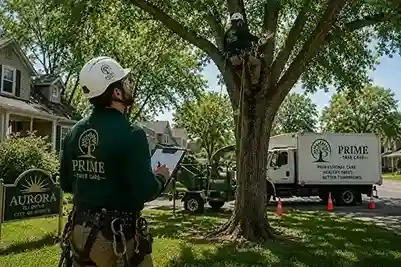
ISA-certified arborist providing tree service in Aurora, IL
What tree services are most commonly needed in Aurora, IL?

Aurora homeowners most often need mature oak and maple preservation pruning, Emerald Ash Borer treatment or removal, structural training for young subdivision trees, storm-damage prevention pruning ahead of straight-line wind season, hazardous tree removal, and species-diversified replanting for lost ash trees.

Local Coverage

Why Tree Care Is Different in Aurora

Illinois's second-largest city spans four counties and two very different tree-care eras — and treating it like a generic Chicago suburb misses both.

Stolp IslandNear EastsideStonebridge

Mature Neighborhoods

Around downtown, Stolp Island, and the Near Eastside, decades-old oaks, silver maples, and honey locusts shade narrow, historic lots. In golf-course communities like Stonebridge, large legacy shade trees are a defining property feature. This canopy needs structural pruning, cabling, and preservation-first treatment plans — not reflexive removal.

Far East SideFar West AuroraFox Valley

Newer Residential Developments

Subdivisions built out toward Route 59, Orchard Road, and the far west side carry young, recently planted trees. Early structural pruning in these first 5–10 years prevents co-dominant stems and weak branch unions that cause failures decades later — and lets us diversify species instead of repeating the ash-monoculture mistake.

Chicago Premium OutletsCorporate Corridors

Commercial Growth Areas

Retail corridors along Farnsworth Avenue and Route 59, HOA-managed subdivisions, and business campuses near I-88 all need scheduled inspections and long-term canopy plans that account for liability, parking-lot islands, and ADA sightlines — not one-off service calls.

Aurora at a Glance

Local Landmarks, Roads & Neighborhoods We Work Around

Knowing the geography changes how a crew plans access, staging, and cleanup — not just what species is in the ground.

Where We Dispatch From

Prime Tree Care is based at 8811 W 87th St in Hickory Hills — about 40 miles and a 45-minute drive west via I-88 (Ronald Reagan Memorial Tollway) and IL-31/Farnsworth Avenue. We route crews around Aurora's core corridors: I-88, Route 59, Randall Road, Farnsworth Avenue, Ogden Avenue (US-34), and Galena Boulevard — so estimates account for real travel and staging time, not a flat citywide rate.

Aurora is split across Kane, DuPage, Kendall, and Will counties, and covers roughly 45.9 square miles — one of the reasons a single "Aurora" service description undersells how different the west side, east side, and far-south subdivisions actually are.

Landmarks & Institutions Near Your Job Site

We regularly work near the Fox River and downtown's Paramount Theatre and RiverEdge Park, the sunken garden and mature canopy at Phillips Park, Blackberry Farm, the Aurora Transportation Center Metra/BNSF station, Rush-Copley Medical Center, Waubonsee Community College, Aurora University, and the Chicago Premium Outlets retail corridor near Farnsworth Avenue and I-88.

Properties feeding into East Aurora 131, West Aurora 129, Indian Prairie 204, Oswego 308, and Kaneland 302 school districts each carry a different average tree age — useful context for a fair estimate.

Climate & Timing

Aurora Weather & Seasonal Tree Care Calendar

Pruning, treatment, and storm-prep timing in Aurora is built around NOAA climate normals from the Aurora Municipal Airport (KARR) station, not generic national advice.

72°F
Aurora, IL — current conditions
CloudyCondition
~80°FToday's high
37%Rain chance today
~39 in / ~34 inAvg. annual rain / snow
Jan – FebHeavy snow/ice loading. Prime dormant-season pruning window opens late Feb.
Mar – AprStructural pruning wraps up; oak pruning must stop before oak wilt beetle season starts.
May – JunOak wilt risk peaks — no fresh oak wounds. EAB adult emergence begins.
Jul – AugStraight-line wind & derecho season. Cabling/bracing inspections recommended before storms hit.
Sep – OctBest season for tree & shrub planting as roots establish before frost; fall storm risk continues.
NovLeaf-drop inspections reveal hidden deadwood and canopy decline before winter loading.
DecEarly dormant pruning where weather allows; emergency crews on standby for ice events.
Year-round24/7 emergency response for storm damage, leaning trees, and downed limbs.
Local Risks

Common Tree Challenges in Aurora

Emerald Ash Borer Losses

Aurora's Forestry Division manages roughly 35,000 city street trees, a share of which are ash lost or declining to EAB over the past decade. We assess whether trunk-injection treatment can still save a tree or whether removal and species-diversified replanting is the better long-term investment.

Storm Damage Risks

Straight-line winds, summer derecho-style events, and heavy wet snow regularly snap poorly thinned limbs across Aurora's older canopy. Preventive structural pruning and cabling before storm season is far cheaper than emergency removal after.

Aging Shade Trees

Legacy oaks and silver maples around Stolp Island and Stonebridge often carry co-dominant stems, decay pockets, and root stress from decades of construction, sidewalk work, and compacted urban soil — all findings we document in a full risk assessment.

Know the Rules Before You Cut: Aurora's Forestry Division

The City of Aurora's Parks, Recreation & Open Space Department – Division of Forestry maintains the roughly 35,000 trees planted in public rights-of-way, generally within five feet of sidewalks or in the planting strip between sidewalk and street. It's illegal for residents to remove or damage a city tree, and only city-licensed arborists may perform city-tree work under a Forestry Division permit. Private trees, everything fully on your own lot, are your responsibility to maintain and remove. Aurora's Unified Development Ordinance also applies additional tree-preservation and permitting requirements for larger removals and new development, administered through the City Forester's office. We help Aurora property owners tell the difference and navigate whichever process applies.

What We Do

Tree Services We Provide in Aurora

Every service below is performed by ISA-certified arborists, dispatched to Aurora addresses across all four counties.
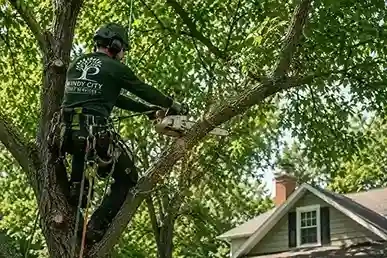
Tree trimming and pruning in Aurora, IL

Tree Trimming & Pruning

Structural pruning, deadwood removal, canopy management, and clearance pruning timed to Aurora's dormant season and oak-wilt calendar.

Learn More →
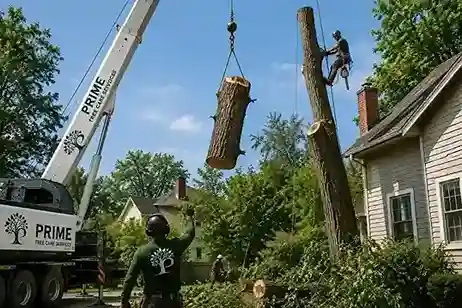
Tree removal in Aurora, IL

Tree Removal

Dead, hazardous, and storm-damaged tree removal, including tight-access backyards near Stolp Island and crane-assisted takedowns.

Learn More →
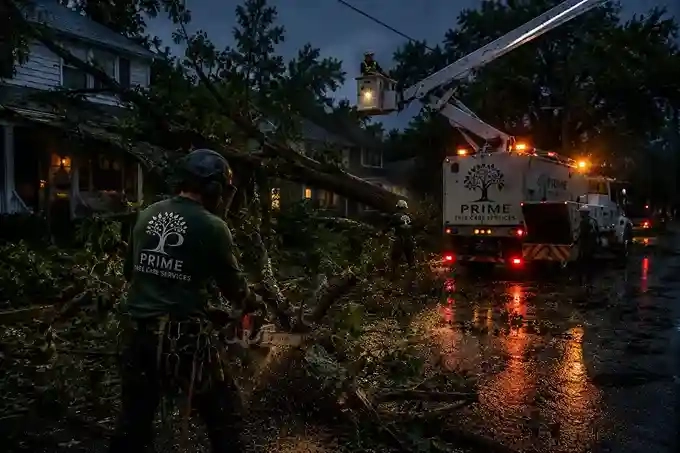
Emergency tree service in Aurora, IL

Emergency Tree Service

24/7 response for downed limbs, split trunks, and leaning trees after Aurora's summer wind and winter ice events.

Learn More →
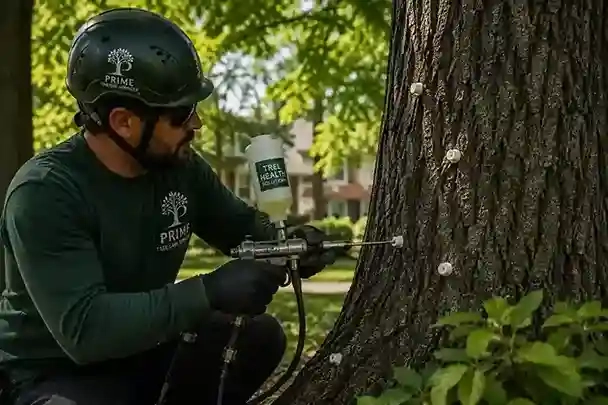
Tree health inspection and treatment in Aurora, IL

Tree Health Inspection & Treatment

On-site diagnosis for Emerald Ash Borer, Dutch elm disease, canopy decline, and root-zone stress across Aurora's soil types.

Learn More →
Tree and shrub fertilization in Aurora, IL

Tree & Shrub Fertilization

Root-zone improvement, soil correction, and nutrient management built for Aurora's clay-heavy, compaction-prone soils.

Learn More →
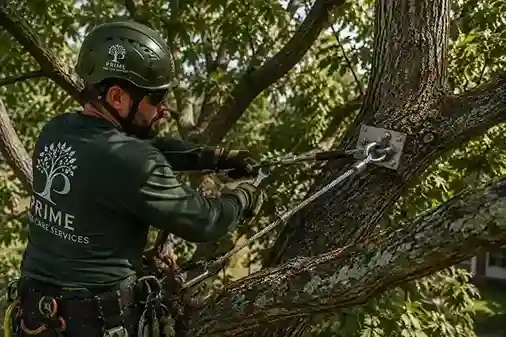
Storm prep and tree support systems in Aurora, IL

Storm Prep & Tree Support Systems

Cabling and bracing installed on mature or storm-prone trees before Aurora's high-wind season, reducing limb-failure risk.

Learn More →
Tree planting and transplanting in Aurora, IL

Tree Planting & Transplanting

Ash-replacement planting, species diversification, and site selection built for long-term canopy resilience in new and established subdivisions alike.

Learn More →
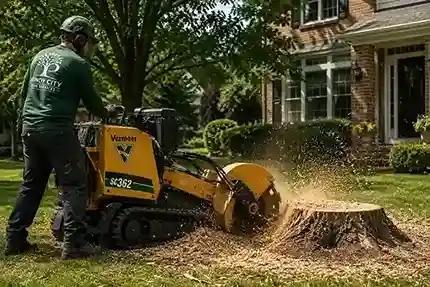
Stump grinding in Aurora, IL

Stump Grinding

Below-grade stump removal that eliminates trip hazards and readies the site for sod, replanting, or hardscaping.

Learn More →
Tree Species

Common Tree Species in Aurora

Oak Trees

Aurora's most valuable legacy shade trees around Stolp Island and older east-side blocks. We use dormant-season structural pruning and preservation-first plans, avoiding any fresh wounds during oak-wilt season (April–June).

Maple Trees

Mature silver and sugar maples throughout older neighborhoods are prone to storm damage from weak branch unions. Proactive limb management and cabling reduce failure risk before a wind event forces the issue.

Ash Trees

Once common street and yard plantings, Aurora's remaining ash trees face ongoing Emerald Ash Borer pressure. We evaluate each tree individually for treatment viability versus removal and replacement.

Honey Locust

A common, urban-tolerant street and parkway species around commercial corridors and mid-century subdivisions. Requires regular structural maintenance to manage its tendency toward included bark and weak crotches.

Elm Trees

Surviving American elms and newer disease-resistant cultivars around older Aurora blocks need ongoing Dutch elm disease monitoring, since the fungus spreads quickly through root grafts and bark-beetle activity.

Newer Subdivision Plantings

Far east and west side developments favor hackberry, swamp white oak, hophornbeam, and Kentucky coffeetree — species we recommend precisely because they diversify Aurora's canopy away from single-species risk.

Local Differentiation

Mature Trees and New Growth: Aurora's Two Tree Care Priorities

Unlike many Chicago-area suburbs that lean almost entirely one direction, Aurora genuinely straddles both worlds — and that shapes every estimate we write here.

  • Century-old neighborhoods around downtown and Stolp Island need preservation-first care: cabling, structural pruning, and risk-managed retention of legacy oaks and maples.
  • Expanding subdivisions past Randall Road and Orchard Road need proactive structural training and species diversification while the trees are still young and mistakes are cheap to correct.

How Prime Tree Care Handles Both

  • Every estimate starts with a full ISA-certified tree risk assessment specific to the tree's age and site.
  • Mature-tree jobs prioritize preservation and support systems over reflexive removal.
  • New-development jobs focus on early structural pruning and diversified species selection.
  • One arborist, one process, calibrated to whichever side of Aurora your address falls on.
Warning Signs

Signs You Should Schedule an Arborist Inspection

🌵 Dead or bare branches in the upper canopy

📐 A trunk leaning more than it used to

⚡ Cracks running along major limbs or the trunk

🪵 Bark separating or peeling from the trunk

🍄 Mushrooms or fungal growth at the base

🍂 A sparse, thinning canopy compared to prior years

🌳 Exposed or heaving roots near the base

⛈️ Visible storm damage — split limbs or torn bark

How It Works

Our Tree Care Process

01

ISA-Certified Inspection

An ISA-certified arborist walks your Aurora property in person to evaluate every tree in question.

02

Tree Risk Assessment

We document species, structure, decay, and proximity to structures, driveways, or power lines.

03

Treatment or Removal Plan

You receive a clear, written recommendation and an itemized, upfront estimate — no pressure.

04

Professional Tree Work

Our crew completes the work with utility-aware safety procedures and the right equipment for the job.

05

Cleanup & Follow-Up Recommendations

We clear all debris and follow up with next-season care or monitoring recommendations.

Pricing

Aurora Tree Service Cost Guide

Educational estimates only — your written quote depends on diameter, height, accessibility, crane requirements, utility conflicts, and disposal volume.

ServiceTypical Range
Tree Trimming$300–$1,500+
Small Tree Removal$300–$900
Medium Tree Removal$1,500–$3,500
Large Tree Removal$4,000–$10,000+
Emergency RemovalVariable — call for same-day quote
Stump Grinding$150–$1,200+

For a broader regional breakdown of what drives pricing across our full service area, see our Chicagoland Tree Removal Cost Guide.

Why Prime

Why Aurora Homeowners Choose Prime Tree Care

🎓 ISA Certified Arborists

Every inspection and recommendation is backed by ISA-certified training, not a rotating crew of day laborers.

🌱 Preservation Mindset

We recommend removal only when a tree genuinely can't be saved — not as the default answer.

🛡️ Fully Insured Crews

Verified coverage protects your Aurora property, your neighbors', and our crew on every job.

🚛 Modern Equipment

Crane and bucket-truck access for tall or tight-access removals near Stolp Island and downtown lots.

💬 Transparent Estimates

Clear, itemized pricing before work starts — no vague verbal quotes or surprise disposal fees.

🗺️ Long-Term Canopy Planning

Expertise spanning legacy oak preservation to new-tree structural training for growing subdivisions.

Michael Reynolds, ISA Certified Arborist, Prime Tree Care

Michael Reynolds, ISA Certified Arborist

Lead Arborist, Prime Tree Care

Michael has spent 15+ years working Chicagoland's tree canopy, with hands-on experience across Aurora's mature inner neighborhoods and newer far-side subdivisions alike. He leads Prime Tree Care's tree risk assessments, storm-mitigation planning, and oak-preservation strategy in Aurora, and consults with homeowners and HOAs on species diversification after the region's ash losses. Michael and his crews are familiar with Aurora's Forestry Division permitting process and coordinate directly with the City Forester's office when a job requires it.

Explore More

Related Services & Nearby Areas

Common Questions

Aurora Tree Service FAQ

How much does tree service cost in Aurora?+

Most Aurora homeowners pay $300–$1,500 for trimming, $300–$3,500 for small to medium tree removal, and $4,000+ for large or crane-assisted removals. Stump grinding runs $150–$1,200 depending on diameter and root spread. Final pricing depends on tree size, accessibility, and proximity to structures or utility lines.

What tree species are most common in Aurora?+

Aurora's canopy is dominated by mature oaks and maples in older neighborhoods like Stolp Island and the Near Eastside, honey locust and remaining ash plantings from mid-century subdivisions, and younger species-diverse plantings in newer far-east and far-west developments.

Should I remove or treat an ash tree with Emerald Ash Borer?+

It depends on infestation severity. Trees with canopy loss under 30% and no major trunk damage are often good candidates for trunk-injection treatment. Trees with significant dieback, bark splitting, or structural decay are usually safer and more cost-effective to remove and replace.

When is the best time to prune trees in Aurora?+

Late winter — roughly February through March — is the ideal dormant-season window for most structural pruning. Oaks specifically should be pruned only in this dormant window to avoid oak wilt, which spreads through sap-feeding beetles most active April through June.

Can storm-damaged trees be saved?+

Often, yes. A tree with less than 50% crown loss, an intact leader, and no major trunk splitting can usually be pruned back and supported with cabling. Trees with split trunks, exposed root plates, or damage to the main leader are typically safety risks and require removal.

What is a tree risk assessment?+

A tree risk assessment is an ISA-certified arborist's structured evaluation of a tree's species, structure, decay, root stability, and proximity to targets like homes, driveways, or power lines, resulting in a documented risk rating and a recommended treatment, monitoring, or removal plan.

How often should mature trees be inspected?+

Mature shade trees in established Aurora neighborhoods should be inspected annually, with an additional check after any major storm. Trees showing early decline, prior storm damage, or known EAB exposure benefit from twice-yearly monitoring.

What should I plant instead of ash trees in Aurora?+

Strong replacement choices for Aurora's soil and climate include hackberry, swamp white oak, disease-resistant elm cultivars, hophornbeam, and Kentucky coffeetree. Diversifying species across a block reduces the risk of losing an entire street's canopy to a single pest or disease again.

Schedule a Tree Inspection in Aurora

Book a tree risk assessment, request a pruning consultation, evaluate a storm-prone tree, or discuss a species-replacement plan — protecting Aurora's mature canopy while building a healthier future urban forest.

Request a Free Estimate 🚨 Call (773) 302-8351
Call Now Free Estimate