
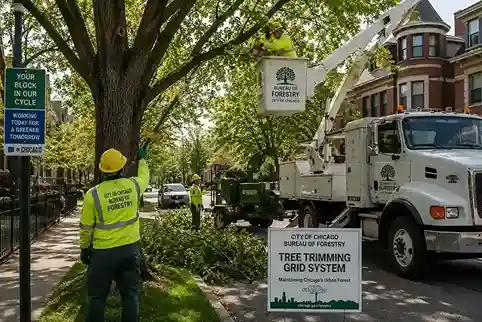
If you've ever submitted a 311 request for an overgrown parkway tree and then waited months — or years — without hearing back, you're not imagining things, and you're not alone. Across Reddit threads, neighborhood Facebook groups, and local news investigations, the same frustrations come up again and again: uncertainty about who actually owns the tree in front of a house, confusion about how CHI311 requests are prioritized, and real concern about dead limbs hanging over a sidewalk or driveway with no clear timeline for when the city will address them.
This guide isn't a criticism of the Bureau of Forestry — Chicago's urban forest is genuinely massive, and the people maintaining it are working within real staffing and budget constraints. Instead, this is an honest, detailed explanation of how the system actually works, why certain requests move faster than others, and — most importantly — what you can realistically do if you're staring at a tree that concerns you right now.
Who Is Responsible for Chicago's Parkway Trees?
The Bureau of Forestry, a division within the Chicago Department of Streets and Sanitation, is responsible for the city's public tree inventory. That includes:
- Parkway tree pruning and routine maintenance
- Tree inspections following resident requests or storm events
- Hazard response for trees posing an immediate public safety risk
- Tree removals when a public tree is dead, dying, diseased, or hazardous
- Tree planting, including replacement plantings and species diversification efforts
- Broader urban forest management, including tracking the health of the public tree inventory citywide
Here's how the pieces fit together in practice:
Residents submit requests through CHI311, which creates a service ticket the Bureau of Forestry uses to schedule inspections and prioritize field work. Ward offices sit alongside this process — they can advocate for constituents and help escalate stalled or clearly urgent requests, but they don't directly control forestry crew scheduling or override the department's technical prioritization.
What Is Chicago's Tree Trimming Grid System?
Chicago maintains a public tree inventory numbering in the hundreds of thousands, spread across every neighborhood in the city. With that scale, and with a limited number of forestry crews, responding to every individual trimming request the moment it's submitted simply isn't operationally possible. So instead of a purely complaint-driven model, the Bureau of Forestry runs a rotational grid system.
Why a Grid System Exists
A grid-based approach lets crews move efficiently through a geographic area, trimming every tree on a block or set of blocks in one pass rather than repeatedly sending trucks back to the same neighborhood for one-off requests. This reduces windshield time between jobs, allows more trees to be serviced overall, and creates a more predictable (if slower-feeling) long-term maintenance cycle for the public tree inventory.
How Grid Cycles Work
The city is divided into geographic zones, and forestry crews work through scheduled pruning routes zone by zone. A given city block is generally serviced once every several years as part of this rotation — meaning your street might be "due" this year, or it might be years out, purely based on where it sits in the current cycle, not based on how long ago you personally submitted a request.
City divided into geographic grid zones
Zones scheduled into a rotational route
Crews service every tree in a zone
Crew moves to next zone in sequence
Emergencies pulled off-cycle as needed
Zone returns to rotation years later
This explains a common point of confusion: why a neighbor's block seemingly "got trimmed" while yours, a few blocks away, didn't. It's rarely about favoritism — it almost always comes down to grid zone boundaries and where each block sits in the multi-year cycle.
Why Residents Sometimes Wait So Long
Beyond the base grid rotation, several factors regularly push routine requests further out:
Storm Backlogs
Major storm events — derechos, straight-line winds, ice storms, or heavy wet snow — immediately redirect forestry crews away from scheduled grid work and toward emergency cleanup. A single significant storm can generate thousands of new hazard tickets almost overnight, and those legitimately take priority over routine pruning.
Emergency Prioritization
Genuine hazard trees — split trunks, hanging limbs, trees blocking a roadway — are pulled out of the standard rotation and addressed on an emergency basis. This is the correct approach from a public-safety standpoint, but it means routine requests effectively pause every time a new round of hazards comes in.
Seasonal Workload Shifts
Forestry work isn't evenly distributed across the year. Spring often brings a wave of inspection requests as new growth reveals winter damage; summer brings storm response; fall brings cleanup ahead of winter; and winter is typically when structural, dormant-season pruning is prioritized, since it's safer for both the tree and the crew. Your request's timing relative to this seasonal rhythm affects how quickly it's addressed.
Staffing and Resource Constraints
Like most municipal forestry departments across the country, Chicago's Bureau of Forestry operates with a finite number of trained crews relative to the size of the public tree inventory it maintains. This is simply a resource reality, not a reflection of any particular block being deprioritized.
Understanding Tree Priority Levels
Not every request is treated equally, and understanding how forestry staff generally triage situations can help set realistic expectations for your own request.
| Situation | Typical Priority |
|---|---|
| Dead branch over sidewalk | High |
| Hanging limb after storm | Emergency |
| Routine pruning request | Standard |
| Leaning tree threatening a structure | High |
| Tree blocking roadway | Emergency |
| Minor aesthetic trimming | Low |
Arborists generally determine risk level through a combination of factors identified during a formal tree risk assessment: visible structural defects, evidence of internal decay, signs of root plate failure or uprooting, and weak or cracked limb attachments. A tree can look fine from the street and still carry a serious structural defect, which is exactly why a proper inspection — not just a visual drive-by — matters for anything you're genuinely worried about.
What Counts as a Hazardous Tree?
This is one of the most common questions residents have, and the honest answer is that severity and immediacy matter more than how "bad" a tree looks aesthetically.
⚠ Immediate Hazards — Treat as Emergency
- Split or cracked trunk
- Visible uprooting or a lifted root plate
- A hanging or partially detached limb
- A tree in contact with power lines
- A tree blocking a street, sidewalk, or driveway entirely
✓ Non-Emergency Concerns — Standard Request
- Minor deadwood scattered in the upper canopy
- General light pruning needs
- Canopy shaping or aesthetic overgrowth
How to Submit a Tree Request Through CHI311
CHI311 is the correct channel for reporting a concern about a city-owned parkway tree. You can submit a request three ways:
- Mobile App: The CHI311 app allows you to submit a request with photos directly from your phone, and lets you track the status of your ticket over time.
- Website: The 311 website offers the same request form, useful if you'd rather submit from a desktop.
- Phone: Calling 311 directly connects you with a representative who can log the request on your behalf — helpful if you're not comfortable with the app or website, or if the situation feels urgent.
What to Include for a Faster, More Useful Request
- The exact address of the tree, not just a nearby cross street
- Clear photos showing the specific concern (cracking, hanging limbs, lean angle)
- A concise, factual description — "large dead limb over sidewalk, approximately 15 feet up" is more useful than "tree looks bad"
- Whether the issue affects a structure, vehicle, sidewalk, or roadway
Once submitted, your request generates a tracking number you can use to check status through the app or website. Keep this number — it's useful if you need to follow up or escalate later.
What Happens After You Submit a Request?
Understanding the internal process helps explain where delays typically happen:
- Request received — Your ticket enters the Bureau of Forestry's queue.
- Forestry review — Staff review the description and photos to make an initial priority determination.
- Inspection assignment — A field inspector or crew is assigned to visit the site, though this step can take considerable time for non-emergency requests.
- Risk assessment — On-site, the tree is evaluated for genuine hazard indicators versus routine maintenance needs.
- Scheduling — The job is slotted into either the grid rotation (routine) or an expedited hazard queue (emergency).
- Completion — Crews perform the work and close out the ticket.
Most of the perceived delay happens between steps 1 and 3 — the gap between submitting a request and an inspector actually assessing priority — especially for requests that don't obviously read as emergencies from the initial description alone.
When Should You Contact Your Alderman?
Ward offices can be a useful escalation path in specific situations:
- A genuinely hazardous tree that has gone unaddressed for an extended period despite a submitted 311 request
- Repeated requests for the same issue with no visible movement or update
- A clear, ongoing public safety concern affecting multiple residents on a block
What alderman offices can and cannot do: Ward staff can often help follow up on a stalled request and add visibility to a genuine safety concern within city departments. What they generally cannot do is override the Bureau of Forestry's technical assessment process, guarantee a specific completion date, or move a routine cosmetic request ahead of a legitimately higher-priority hazard elsewhere in the ward.
What To Do While Waiting for City Service
This is the part most guides skip entirely — practical steps you can take that don't require the city to act first.
Document Conditions
Take dated photos of the tree from multiple angles, especially anything showing cracking, lean, or hanging material. This creates a timestamped record that's useful both for your own tracking and for any future insurance conversation, should the tree cause damage before it's addressed.
Track Changes Over Time
Periodically check for changes in:
- New or widening cracks in the trunk or major limbs
- Increasing lean angle
- Root lifting or soil heaving at the base
- Expanding dead canopy sections
A meaningful change in any of these is worth an updated 311 report noting the deterioration, since it may re-trigger a higher priority classification.
Get a Private Arborist Evaluation
An ISA-certified arborist can conduct an independent inspection and provide a written risk assessment — even for a parkway tree you don't own. This documentation can help you make informed decisions about precautions on your own property (for example, temporarily avoiding parking directly under a concerning limb), and provides a professional paper trail that can matter significantly for insurance purposes if the tree does fail before the city addresses it.
Can a Private Arborist Work on a Parkway Tree?
This is a common misconception worth clarifying directly.
✓ What a Private Arborist Can Do
- Inspect the tree and assess its condition
- Provide a professional risk assessment
- Document conditions with photos and written findings
- Advise you on interim safety precautions
✗ What Requires City Authorization
- Any pruning of the parkway tree itself
- Removal of a city-owned parkway tree
- Any modification affecting the public right-of-way
In short: a private arborist can tell you exactly how concerned to be and document that professionally, but the actual pruning or removal work on a parkway tree has to go through the city.
Common Chicago Parkway Tree Problems
Certain issues show up repeatedly across the city's parkway inventory, and each affects inspection and trimming priority differently:
Emerald Ash Borer
A significant share of Chicago's parkway trees are ash, and EAB has moved through most of the city's neighborhoods over the past decade. Read our full Emerald Ash Borer in Chicago guide for detection signs and treatment-versus-removal decision factors.
Dutch Elm Disease
Though less widespread today than during the historic outbreaks that reshaped Chicago's tree-lined streets, DED still circulates and remains a factor in city pruning schedules, particularly around timing to reduce beetle-driven spread.
Silver Maple Failures
Older silver maples throughout the city are structurally weaker than many other common street trees and are disproportionately represented in storm-damage and limb-failure reports.
Storm-Damaged Oaks
Mature oaks can sustain internal structural damage from severe wind events that isn't always visible externally, making post-storm inspection important even when a tree looks intact from the sidewalk.
Root-Lifted Sidewalks
Mature parkway tree roots can lift and crack adjacent sidewalk panels over time — a trip-hazard issue that sits at the intersection of forestry and the city's sidewalk repair program.
Salt Damage
Winter road salt runoff affects parkway trees positioned close to the curb, contributing to soil stress and canopy decline that can compound existing health issues.
Utility Conflicts
Overhead service lines running through mature canopy require ongoing utility vegetation management coordination, since this work often falls at the boundary between city forestry and the utility company's own line-clearance obligations.
After Major Storms: What Residents Should Expect
Severe weather events reshape forestry priorities immediately and predictably:
- Derecho events — Widespread, fast-moving windstorms capable of downing large numbers of trees across the metro area in a single event, generating a surge of emergency tickets.
- Straight-line winds — Even without a formal derecho classification, sustained straight-line wind events routinely cause significant limb failure on already-weakened trees.
- Ice storms — Ice accumulation adds substantial weight to limbs, a common cause of sudden, unpredictable branch failure.
- Heavy wet snow — Similar to ice, heavy wet snow loads can snap limbs that would otherwise handle normal winter conditions without issue.
After any of these events, expect routine grid-rotation work to pause almost entirely while crews address the emergency backlog first. This is standard, appropriate practice — but it's also the single biggest reason a routine request can feel like it's "gone quiet" for an extended stretch.
Chicago Parkway Trees vs. Private Trees
Understanding this distinction clearly is the single most useful thing a Chicago homeowner can know about tree ownership. For a full breakdown, see our dedicated guide: Parkway Trees vs. Private Trees in Chicago.
| Topic | Parkway Tree | Private Tree |
|---|---|---|
| Ownership | City of Chicago | Property Owner |
| Routine Pruning | City (Bureau of Forestry) | Owner's responsibility |
| Removal Approval | City authorization required | Owner decides (permit rules may still apply) |
| Inspection Requests | CHI311 | Private arborist |
Real Chicago Scenarios
Lincoln Square
A large boulevard oak along a residential side street is visibly overdue for structural pruning, with deadwood accumulating in the upper canopy over several growing seasons. This reads as a standard-priority request — worth documenting and submitting, but unlikely to jump the queue absent visible hazard signs like cracking or significant lean.
Hyde Park
A mature, historic canopy tree overhangs a heavily trafficked sidewalk near a school. Low-hanging deadwood over a high-pedestrian-traffic area can reasonably be flagged as high priority given the foot traffic exposure, even without a full structural failure.
Dunning
A storm-damaged silver maple has a large split limb still partially attached following a summer wind event. This is a textbook emergency-priority situation — silver maples are already known for weaker wood, and a partially detached limb over a yard or driveway warrants an emergency 311 report, not a routine one.
Mount Greenwood
A large, mature lot has several hanging limbs across multiple trees following recent area storms. Given the real 2026 storm activity that hit this part of the city hard, this kind of multi-tree hazard cluster is common in the weeks following a major event, and residents here should expect crews to be stretched thin across many similar reports simultaneously.
Evanston
Lakefront wind exposure creates unique stress on trees close to the shoreline. While Evanston operates its own forestry department separate from Chicago's, the same underlying principles — grid-based rotation, hazard prioritization, and CHI311-equivalent reporting through the city's own portal — generally apply.
Frequently Asked Questions
How often does Chicago trim trees?
The Bureau of Forestry aims to service every parkway tree on a rotating multi-year cycle through the grid system, rather than on a strict per-request basis. A given block might see routine crews once every several years, while hazards are handled outside this normal rotation.
How do I request tree trimming in Chicago?
Submit a request through CHI311 — via the mobile app, the 311 website, or by phone. Include the exact address, a description of the issue, and photos if possible.
What is the Chicago tree trimming grid system?
A rotational maintenance model where the Bureau of Forestry divides the city into geographic zones and works through them systematically, rather than responding to individual complaints in submission order. Emergencies are pulled out of the normal rotation.
How long does Chicago take to trim trees?
For routine requests, realistic wait times can run from many months to a few years depending on grid position and recent storm activity. Genuine hazards are prioritized well ahead of routine work.
Can I trim a city tree myself?
No. Parkway trees are city-owned, and unauthorized pruning or removal isn't permitted. A private arborist can inspect and document conditions, but the actual work requires city involvement.
What qualifies as a hazardous tree?
A split or cracked trunk, visible uprooting, a hanging or partially detached limb, contact with power lines, or a lean threatening a structure, vehicle, or roadway. Minor deadwood or aesthetic overgrowth typically doesn't qualify as an emergency.
What if a tree is touching power lines?
Treat it as an emergency. Keep people and pets away, avoid touching the tree or nearby metal, and report it immediately. If a line is down or arcing, contact ComEd and 911 directly rather than waiting on a routine forestry request.
Should I call 311 or an arborist?
For a parkway tree, 311 is the correct first step for pruning or removal requests. A private ISA-certified arborist is useful in parallel for documenting condition and advising on interim safety while you wait on the city.
Can my alderman speed up a request?
Ward offices can sometimes help escalate a stalled or clearly urgent request, but they generally cannot override the Bureau of Forestry's technical prioritization process or guarantee a specific timeline.
Who owns parkway trees in Chicago?
The City of Chicago owns and maintains parkway trees — those planted between the sidewalk and the street. Trees anywhere else on a private lot belong to the property owner.