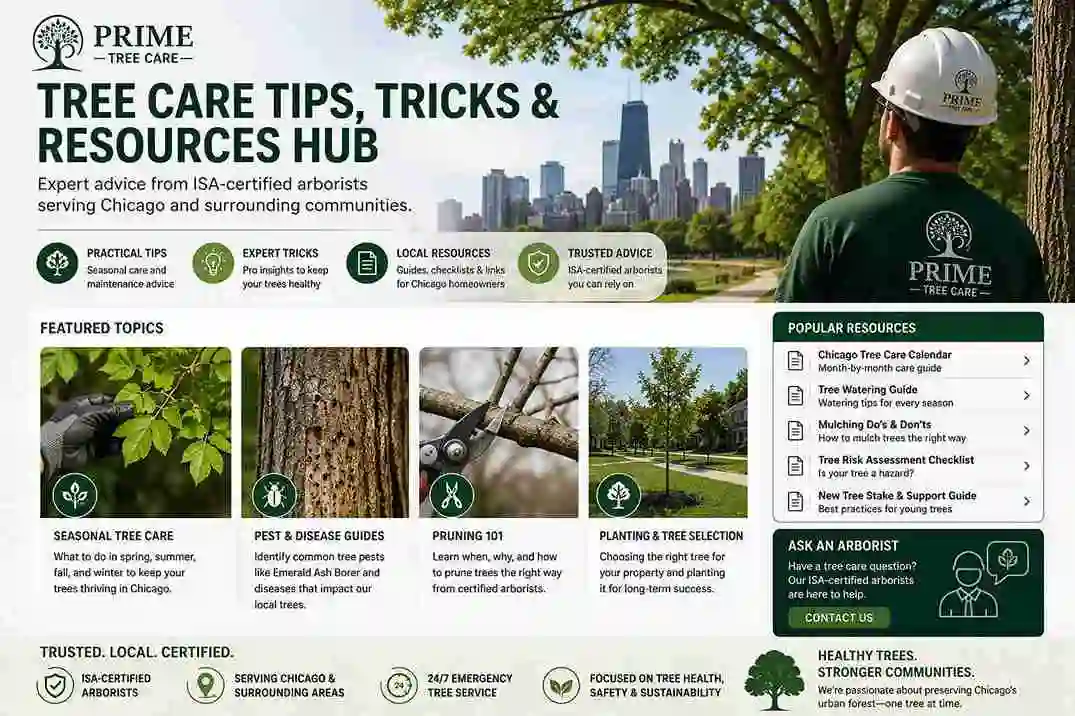
Most tree-care advice online is written for a national audience — and it shows. It rarely accounts for the specific conditions that shape tree ownership and tree health here in Chicago.
Chicago's urban forest carries scars and pressures a generic blog post won't mention: the ongoing fallout from Emerald Ash Borer, which has removed tens of thousands of ash trees from parkways and yards citywide; Dutch Elm Disease, which continues to threaten the city's remaining elms; and a mature urban canopy planted in waves during the mid-20th century that is now aging into the stage of life where structural risk becomes real. Add to that the near-universal confusion over parkway tree ownership — many homeowners assume the tree between the sidewalk and the street is theirs, when it's often the City's — plus the layers of Bureau of Forestry process, permitting, and 311 requests that come with anything touching public-way trees.
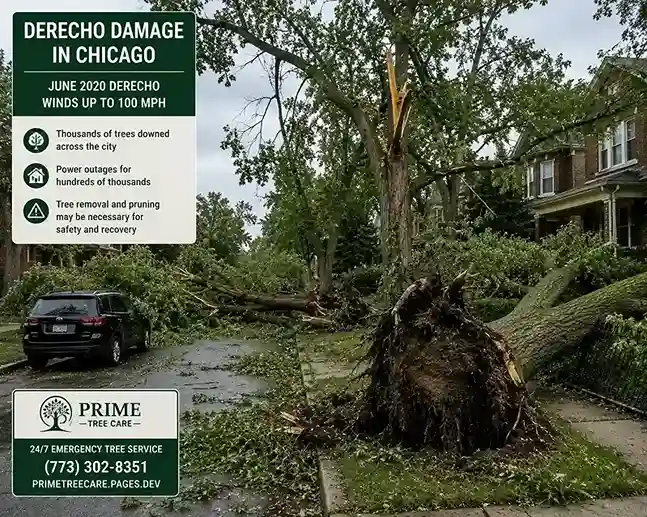
On top of all that, Chicago sees genuine high-wind events and derechos most national guides never mention, historic neighborhoods with tree preservation considerations, frequent utility conflicts between mature canopy and overhead lines, and an aging population of silver maples prone to structural failure. Generic advice can't account for any of it. This Resource Center is built specifically around Chicago and Chicagoland conditions, written by the ISA-certified arborists who work in this canopy every day.
Many homeowners discover that tree removal involves more than simply hiring a contractor. Ownership, permits, liability, and city regulations can significantly affect the process.
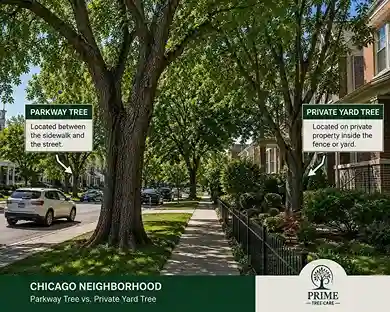
Who owns a tree, who is responsible for maintenance, and who pays when problems arise.
Read the article →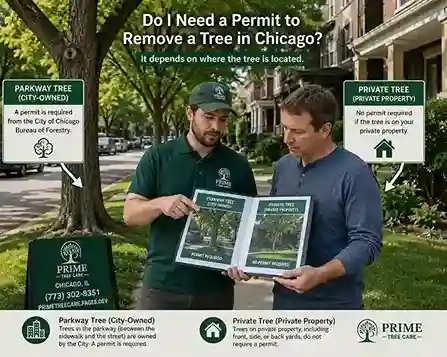
The most misunderstood aspect of tree ownership in Chicago, explained clearly.
Read the article →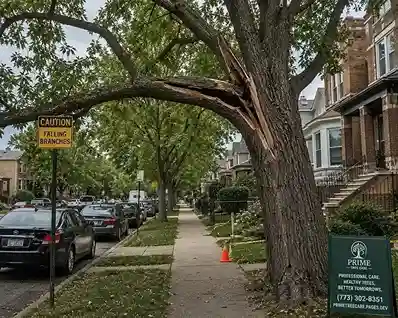
Practical guidance when a dangerous city tree becomes a safety concern.
Read the article →One of the most searched topics online is tree service pricing. This cluster provides transparent guidance on costs and how to evaluate estimates.
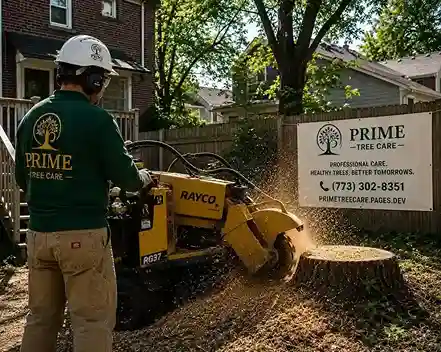
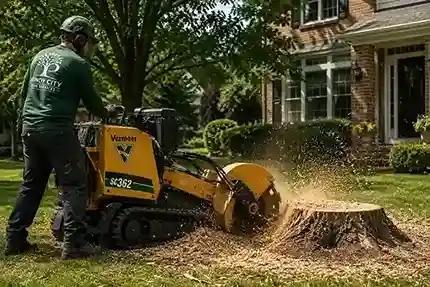
What actually drives stump grinding pricing, and how to budget for it.
Read the article →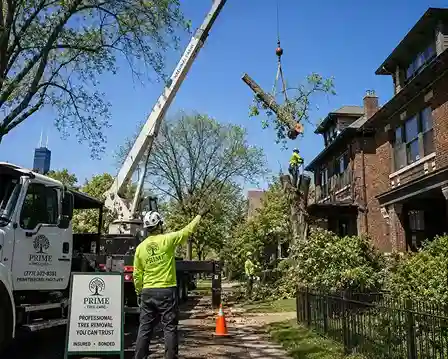
Insurance verification, crane removals, safety standards, utility clearance, and licensing — what a rock-bottom quote often skips.
Read the article →Chicago's urban forest faces ongoing threats from invasive insects and diseases. Early diagnosis is the difference between treatment and removal.
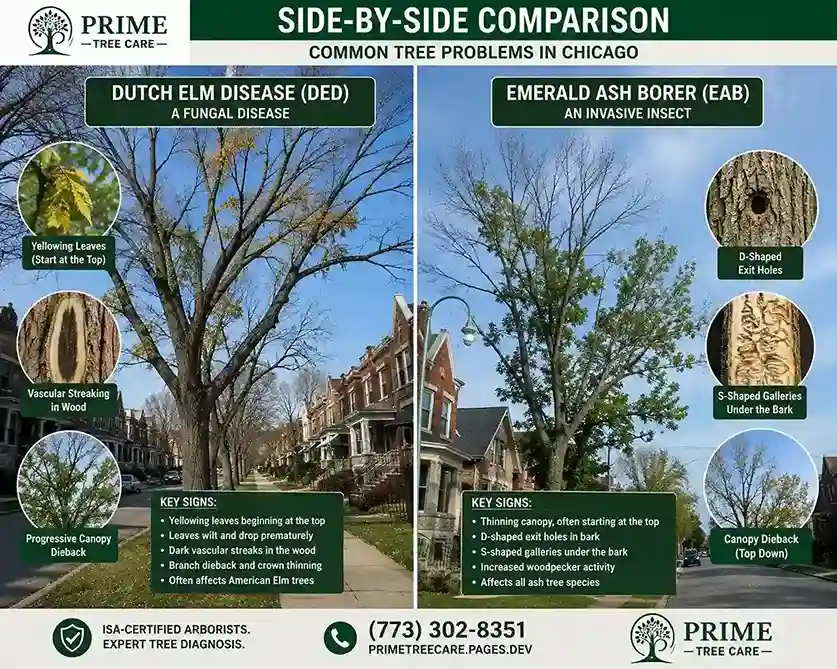
Identification, treatment options, and when removal is the safer path for ash trees.
Read the article →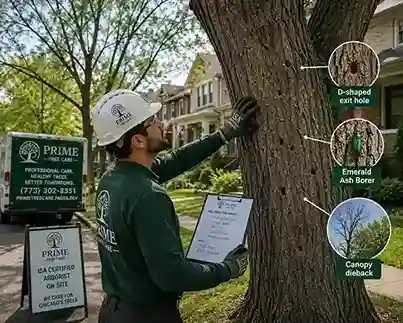
How the disease spreads through root grafts, and how to monitor remaining elms.
Read the article →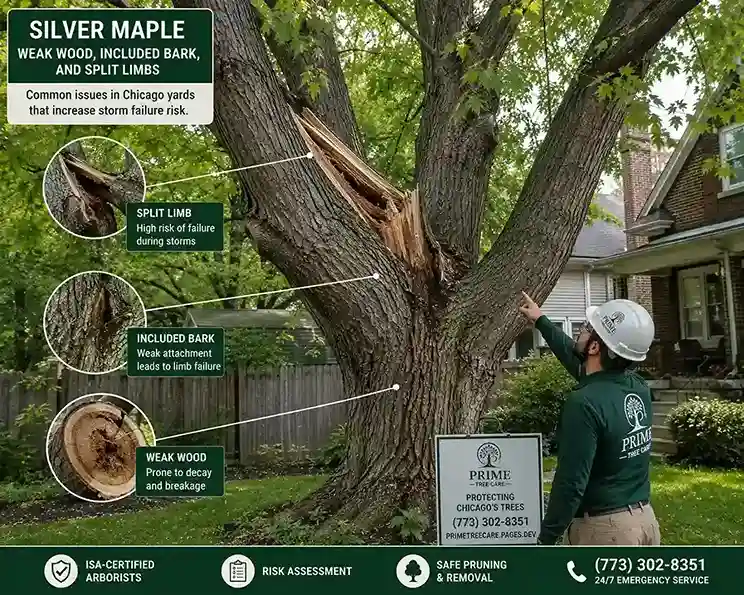
Why this once-popular shade tree is now one of the region's most storm-prone species.
Read the article →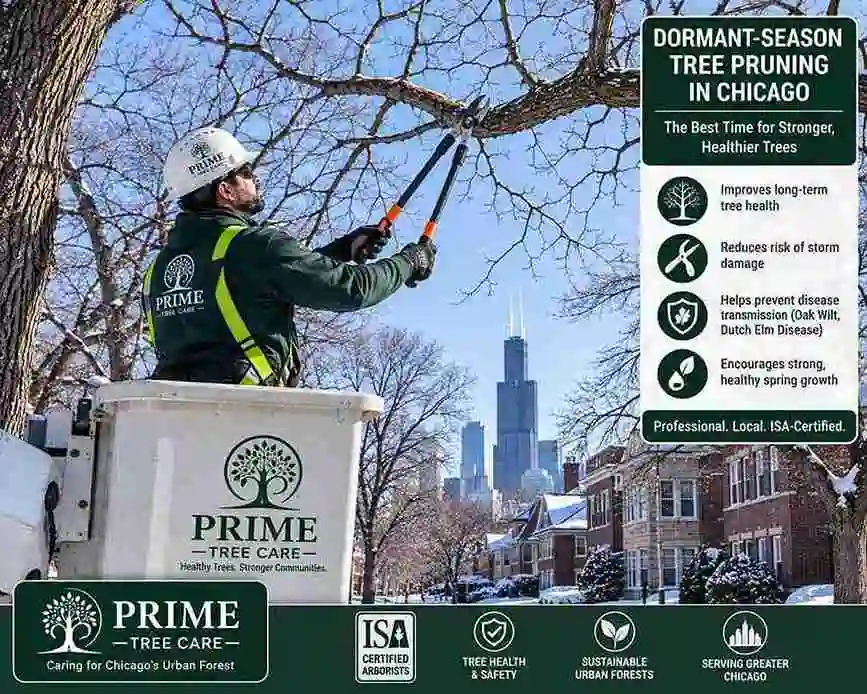
Why pruning timing matters for disease prevention in oaks and elms.
Read the article →Chicago experiences severe weather events ranging from straight-line winds to derechos. Knowing what to do before and after matters.
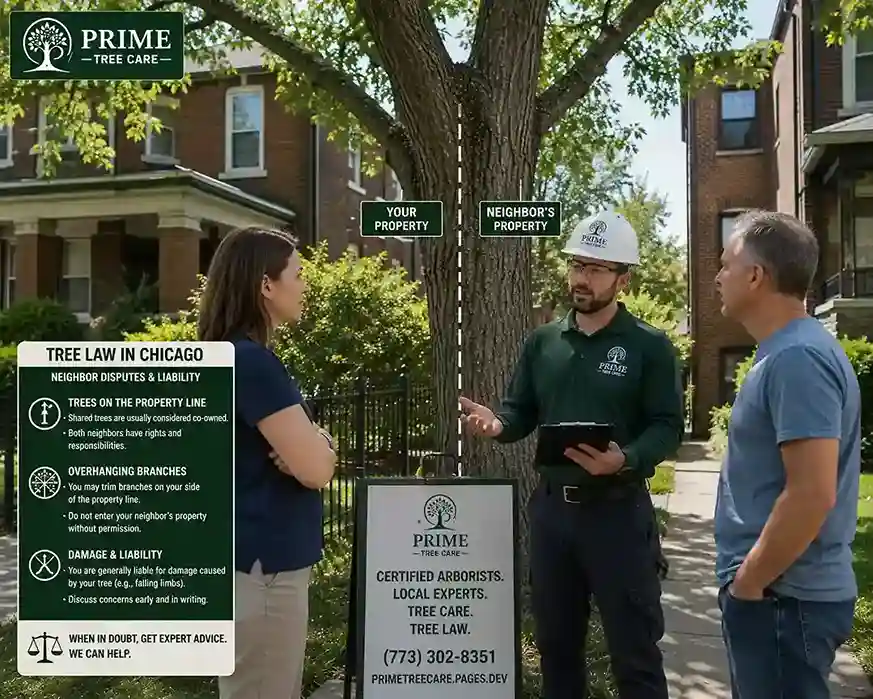
Property-line trees create some of the most common homeowner conflicts in Chicago's dense residential blocks.
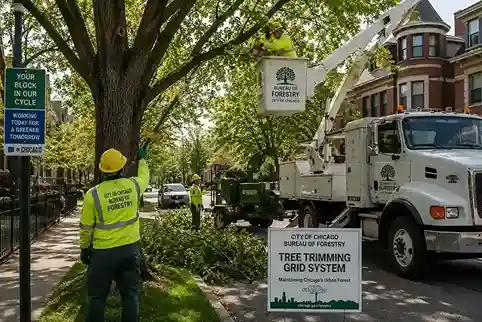
Many tree concerns involve the City of Chicago rather than private contractors — and the process isn't always intuitive.
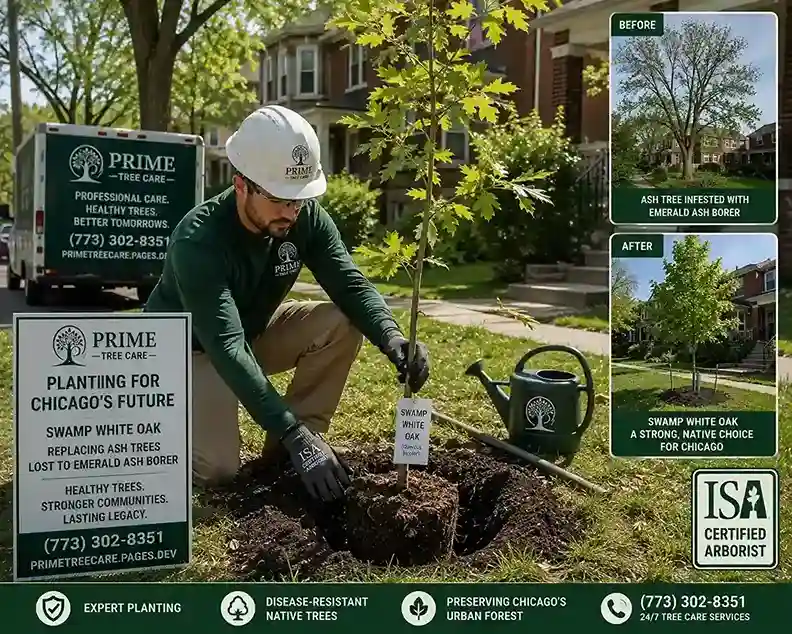
After the loss of thousands of ash trees, species diversification has become critical to Chicago's long-term canopy health.
A quick reference for the species, problems, and services that come up most often across our Chicago service calls.
Bur, red, and white oak are common across established neighborhoods; oak wilt risk affects pruning timing.
Remaining elms require ongoing Dutch Elm Disease monitoring.
A widely planted, storm-resistant street and parkway tree.
A common shade tree valued for its dense summer canopy.
Fast-growing but structurally weak; prone to storm failure with age.
An increasingly popular native replacement species for declining ash.
A resilient, wet-tolerant oak gaining popularity in canopy recovery plantings.
The invasive beetle responsible for widespread ash tree loss citywide.
A fungal disease spread by bark beetles and root grafts between elms.
A fast-moving fungal disease requiring careful pruning-season awareness.
Broken limbs and structural failures from high-wind and derecho events.
Clay soil and urban development limit healthy root expansion.
Canopy growth into overhead lines requiring clearance pruning.
Safe removal of hazardous, dead, or storm-damaged trees.
Structural, clearance, and dormant-season pruning.
Species selection and installation for canopy recovery.
On-site diagnosis of disease, pests, and decline.
Structural support systems for storm-prone trees.
Below-grade stump removal for replanting and landscaping.
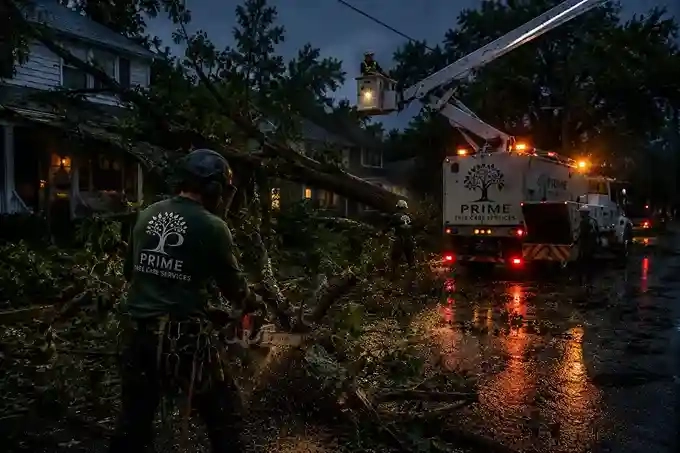
24/7 response for storm damage and hazardous trees.
Every article in this hub connects back to the hands-on service that solves it. Here's the full lineup.
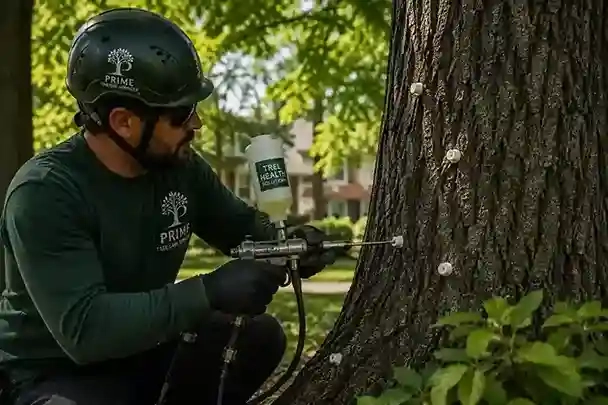
Diagnosis and treatment for disease, pests, and canopy decline.
Learn more →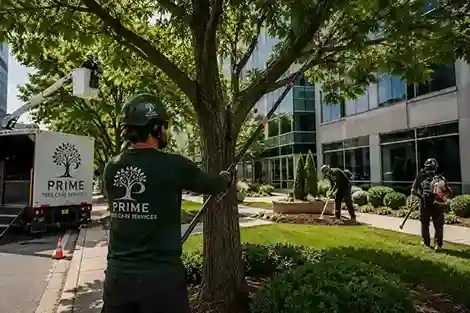
Species selection and installation for long-term canopy health.
Learn more →
Prime Tree Care serves Chicago's neighborhoods and the surrounding suburbs. Find local, area-specific guidance for your part of Chicagoland.
Citywide tree removal, trimming, and emergency response across every ward.
Historic tree-lined streets and mature canopy near the University of Chicago.
Dense residential blocks with older parkway trees needing regular care.
A mix of residential and industrial lots with varied tree maintenance needs.
Established Northwest Side subdivisions with mature shade trees.
Far Southwest Side neighborhood known for its large residential lots and canopy.
From Rogers Park to Lakeview, dense urban canopy along residential corridors.
A broad mix of neighborhoods with varying canopy age and storm exposure.
Park-adjacent blocks with mature trees near Jackson Park's green space.
A leafy North Shore suburb with an extensive, well-established tree canopy.
Historic neighborhood known for its mature trees and landmark architecture.
A near-west suburb with dense, mature residential canopy.
Mature subdivisions and a major commercial corridor along Golf Road.
A DuPage County suburb with established residential tree cover.
Growing residential areas alongside older, established tree stock.
A southwest suburb near our Hickory Hills base with mixed residential canopy.
A compact DuPage County suburb with mature parkway and yard trees.
One of Illinois's largest suburbs, with a wide range of canopy ages.
A far-northwest suburb with larger lots and more open canopy.
A south suburban community with a mature, aging residential canopy.
Emerald Ash Borer, Dutch Elm Disease, storm damage from high winds, root compaction in clay soil, and structural weaknesses in aging silver maples are among the most common issues we see across Chicago and the surrounding suburbs.
Trees growing in the parkway — the strip of grass between the sidewalk and the street — are generally owned and maintained by the City of Chicago's Bureau of Forestry, not the adjacent homeowner. Trees fully within a private yard are typically the homeowner's responsibility.
Dutch Elm Disease, oak wilt, and the ongoing impact of Emerald Ash Borer are the three most significant disease and pest pressures affecting Chicago's urban forest today.
Late fall through early spring — the dormant season — is generally best for most species, since it reduces disease transmission risk. Oaks in particular should avoid pruning during peak oak wilt season in late spring and summer.
It depends on the tree's location. Parkway and other public-way trees require a Bureau of Forestry permit, while private trees generally have different requirements. Confirming a tree's ownership and status is the first step.
We generally recommend a professional risk assessment every one to two years for mature trees, and immediately after any major storm event.
Stay clear of any tree with visible cracks, hanging limbs, or contact with power lines, and call for emergency tree service immediately if a tree is threatening a structure, vehicle, or roadway.
Species like Kentucky coffeetree, swamp white oak, honey locust, and other diverse, climate-resilient natives are commonly recommended to replace lost ash trees and reduce future disease vulnerability.
Every article and every job is grounded in real arboricultural credentials, not marketing copy.
We evaluate structural risk using recognized ISA standards, not guesswork.
Years of hands-on work in Chicago's specific canopy, soil, and storm conditions.
Every resource is written for Chicago and Chicagoland conditions — never generic national content.
24/7 dispatch for storm damage and hazardous trees across our full service area.
We recommend removal only when it's genuinely the safest, most responsible option.
Schedule a tree assessment with Prime Tree Care. Our ISA-certified arborists provide honest, written recommendations for any tree concern across Chicago and the surrounding suburbs.
 Prime Tree Care